

Types of Tests Engineering
A comprehensive suite of precision engineering tests to ensure the safety and quality of construction projects across the Kingdom
Test Categories
Test Types
Years Experience
Completed Projects
Fresh Concrete Tests
Fresh Concrete Tests
Cube & Cylinder Samples
Samples are taken during casting to test their resistance after hardening (e.g., compression test).
Slump Test
Used to measure the workability of concrete and ease of casting on site.
Concrete Mix Design
Determining the proportions of materials to obtain a concrete mix of appropriate resistance per specifications.
Temperature Measurement
The temperature of fresh concrete is measured to ensure compliance with specified environmental conditions.

Hardened Concrete Tests
Hardened Concrete Tests
Cube & Cylinder Compression Tests
Evaluates concrete compressive strength after specified curing periods (7 days and 28 days).
Half-Cell Potential Test
Used to assess the probability of corrosion in reinforcement inside reinforced concrete.
Schmidt Hammer Test
A non-destructive test to measure concrete surface hardness using a rebound hammer.
Concrete Core Test
Taking cylindrical samples from existing structures to analyze their mechanical and structural properties.

Soil Field Tests
Soil Field Tests
Soil Borings at Required Depths
Executing exploratory pits at the site to reach required soil layers and collect samples to determine their geotechnical properties.
Standard Penetration Test (SPT)
Used to measure soil resistance to penetration and determine its bearing capacity, helping to select the appropriate foundation system.
Groundwater Level Measurement
To determine groundwater depth and its effect on structural designs, excavation operations, and foundations.
Geotechnical Field Tests
Geotechnical Field Tests
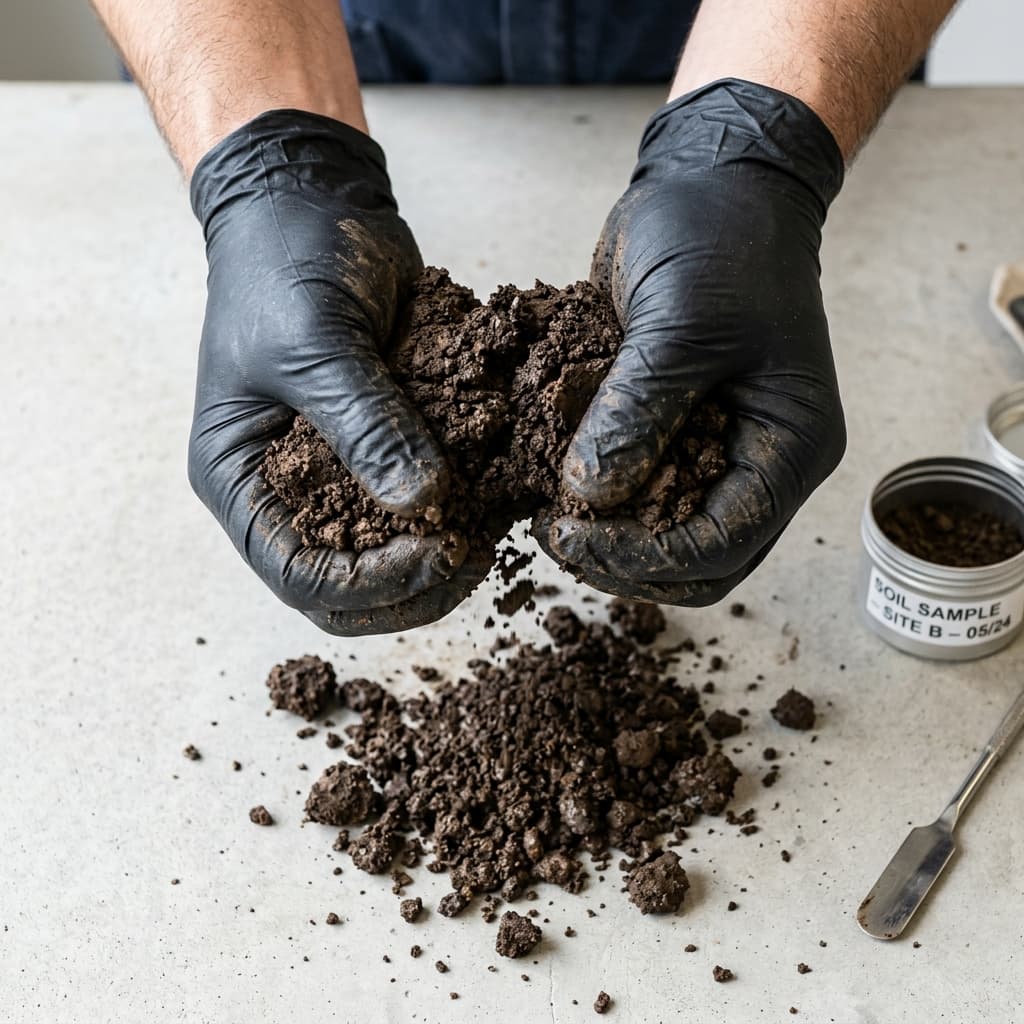
Soil Density Measurement
Used to measure soil density at the site after backfilling and compaction, to ensure the required density per specifications is achieved.
Sand Cone Method
Used to measure soil density at the site after backfilling and compaction, by filling a small hole with sand of known density then calculating the density of soil around the hole.
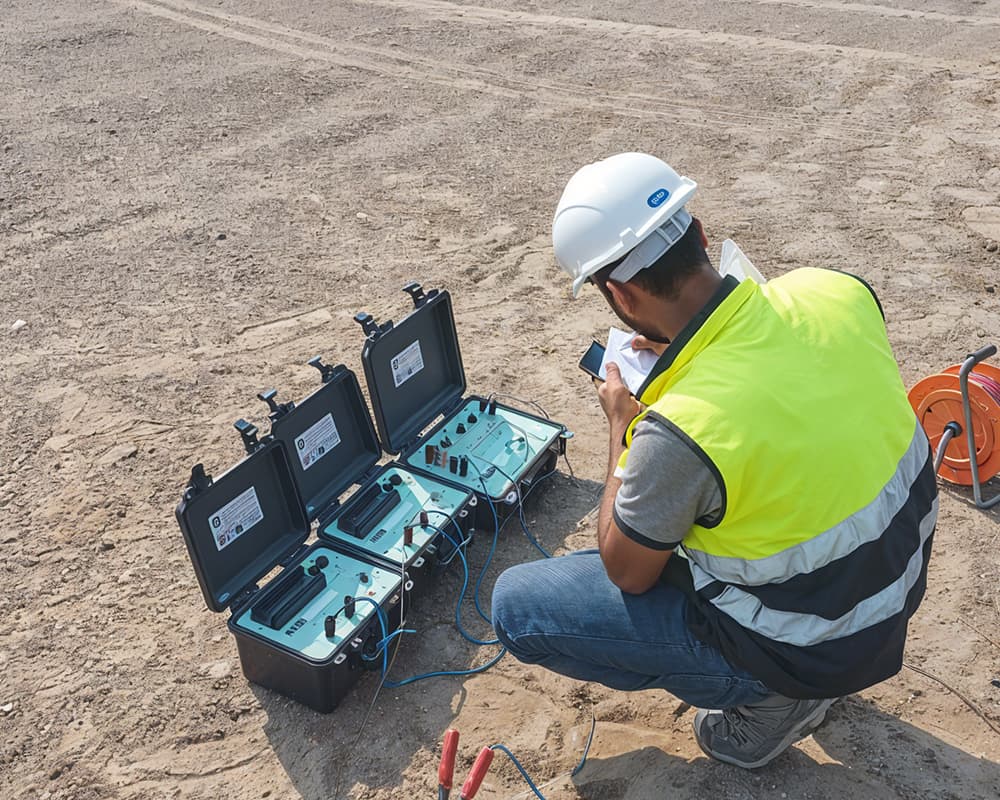
Nuclear Method
A portable nuclear device is used that emits radiation to measure soil density and moisture directly on-site without excavation. The device is placed on the soil surface or inserted to a certain depth to obtain readings.
Soil & Rock Tests
Soil & Rock Tests
Rock Density & Porosity
Measuring rock cohesion and void ratio to evaluate their suitability as construction materials.
Saturated Moisture Content of Rocks
Determining the amount of water rocks can retain when saturated, which affects their strength.
Point Load Index of Rocks
A test that evaluates rock resistance to fracture under a concentrated load, used in their classification.

Pavement Layer Tests
Pavement Layer Tests
Density Measurement by Sand Cone Method
A field test to calculate the density of soil or pavement materials at the actual construction site.
Compaction Test
Determines the quality of compaction of soil or backfill layers.
Kinematic & Absolute Viscosity Test
Evaluating viscosity properties of liquid asphalt to ensure appropriate performance during paving.

Aggregate Tests
Aggregate Tests
Fine Material Ratio in Aggregate
Measuring the ratio of dust or fine materials that affects mix cohesion.
Clay Lumps and Friable Particles
Evaluating the stability and quality of aggregate when exposed to moisture and pressure.
Aggregate Abrasion Resistance
Testing aggregate strength against friction and wear.
Particle Size Distribution Test
Measuring the distribution of particles within the aggregate to determine its suitability for concrete or asphalt design.
Bituminous Asphalt Tests
Bituminous Asphalt Tests
Specific Gravity & Absorption
Measuring the properties of aggregate used in bituminous mixtures.
Sieve Analysis
To determine the gradation of aggregate used in the mix.
Plasticity & Liquidity Calculation
Determines fine soil properties in the mixture if present.
Water Content Calculation
To determine the ratio of water in the components entering the mixture.
Aggregate Degradation
Testing aggregate resistance to disintegration when exposed to weather changes.
California Bearing Ratio (CBR)
Important for determining soil capacity to withstand loads.
Quality & Accreditation Standards
Accredited to the highest international laboratory standards
We track tests at precise intervals to ensure accuracy
Team ready to visit your site at any time
Need an Engineering Test?
Our specialized team is ready to serve you at any site across Saudi Arabia